Overview

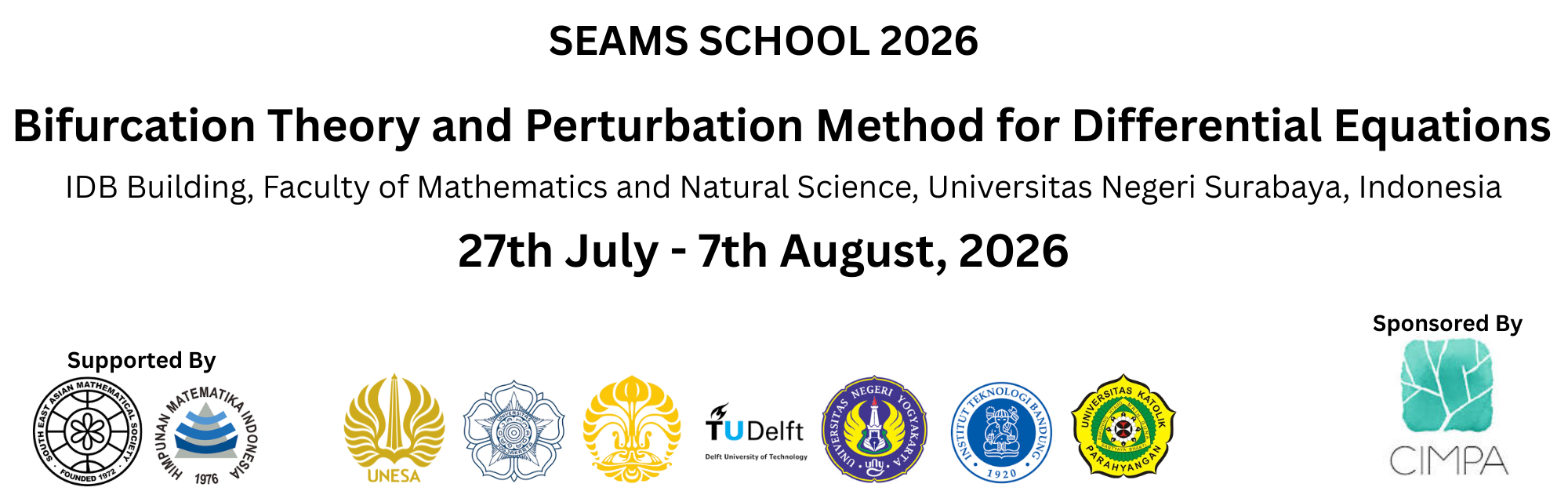
The SEAMS School 2026 is an international advanced training program dedicated to Bifurcation Theory and Perturbation Methods for Differential Equations, organized at the Department of Mathematics, FMIPA, Universitas Negeri Surabaya (Unesa), Indonesia. As part of the long-standing SEAMS initiative, the School aims to strengthen mathematical research capacity and foster international cooperation, particularly among young researchers from developing countries.

Sponsored by CIMPA (Centre International de Mathématiques Pures et Appliquées) and supported by prominent partner universities, SEAMS School 2026 offers high-level lectures delivered by internationally recognized experts. The program emphasizes rigorous mathematical foundations, research-oriented training, and the development of sustainable international research networks.

About SEAMS School at Unesa

The SEAMS School 2026, entitled Workshop on Bifurcation Theory and Perturbation Method for Differential Equations, is part of a long-standing international academic program that has been organized regularly since 2001. In 2026, the School will be hosted by the Department of Mathematics, Faculty of Mathematics and Natural Sciences (FMIPA), Universitas Negeri Surabaya (Unesa), Indonesia. The workshop will take place at the Ketintang Campus and is supported by the Indonesian Mathematical Society, with academic collaboration from several national and international partner universities.

The Department of Mathematics at FMIPA Unesa offers strong undergraduate and graduate programs and has research expertise covering analysis, algebra, applied and computational mathematics, statistics, geometry, topology, and mathematical modeling. Through SEAMS School 2026, Unesa continues its commitment to fostering international academic exchange, strengthening research capacity, and supporting early-career mathematicians in Southeast Asia and beyond.

What You Will Get from the School

Participants of SEAMS School 2026 will gain in-depth knowledge of bifurcation theory and perturbation methods for differential equations, with emphasis on both theoretical foundations and practical applications. The School is designed to strengthen analytical skills that are essential for research in applied mathematics, nonlinear dynamics, and mathematical modeling.Through intensive lectures, guided discussions, and problem-solving sessions, participants will enhance their ability to analyze qualitative behavior of dynamical systems arising in engineering, biology, epidemiology, and other applied sciences. The School also provides valuable opportunities for academic networking, collaboration with international experts, and professional development.

Target Audience

SEAMS School 2026 is primarily intended for Master students and young researchers in mathematics and related disciplines, particularly those from developing countries. The program is designed for participants who have a solid background in differential equations and a strong motivation to pursue research-oriented academic careers.

The School especially welcomes: - Master’s students seeking advanced training in nonlinear differential equations; - Doctoral students and early-career researchers interested in bifurcation theory and perturbation methods; - Young academics aiming to build international research networks and explore opportunities for joint supervision or Ph.D. studies abroad.

Key benefits of participating in SEAMS School 2026 include

These benefits make the School particularly valuable for postgraduate students and early-career researchers aiming to pursue advanced research and international academic careers.

Benefit No. 1

Enriching understanding of contemporary issues in differential equations and nonlinear dynamical systems.

Benefit No. 2

Opportunities to establish collaborative research with international lecturers and fellow participants.

Benefit No. 3

An initial selection pathway for prospective Ph.D. students under joint supervision programs.

Benefit No. 4

An opportunity to obtain a Letter of Acceptance (LoA) for Ph.D. study at TU Delft.

Speakers

SEAMS School 2026 will feature a distinguished group of speakers from leading national and international universities, as listed in the official event poster.
The speakers bring strong expertise in bifurcation theory, perturbation methods, and applied differential equations.

Dr. Ir. Wim T. van Horssen

Delft University of Technology, The Netherlands

Prof. Dr. Abadi, M.Sc.

State University of Surabaya, Indonesia

Prof. Dr. J. M. Tuwankotta, M.Si.

Bandung Institute of Technology, Indonesia

Prof. Dr. Fajar Adi Kusumo, S.Si., M.Si.

Gadjah Mada University, Indonesia

Dr. Livia Owen, M.Si.

Parahyangan Catholic University, Indonesia

Dr. Fitriana Yuli Saptaningtyas, M.Si.

Yogyakarta State University, Indonesia

Dr. Eric Harianto, S.T., M.M., CIHCM, CMC, CIPA, CCD., GA.

Bandung Institute of Technology, Indonesia

Dr. Nikenasih Binatari, M.Si.

Yogyakarta State University, Indonesia

Rahmi Rusin, S.Si., M.Sc.Tech., Ph.D.

University of Indonesia, Indonesia

Riska Wahyu Romadhonia, M.Sc.

State University of Surabaya, Indonesia

Funding Support and Selection Mechanism

SEAMS School 2026 applies a merit-based selection process based on applicants’ Curriculum Vitae (CV) and Motivation Letter. Depending on the applicant’s interest and eligibility, there are three selection mechanisms :

General Participant Selection

Applicants are selected to participate in the School based on academic background, relevance of research interests, and motivation. Selected participants will attend the School without financial support.

Selection for Partial Funding Support

A limited number of participants (approximately 10 participants) will be selected to receive partial funding support. The allocation follows CIMPA-oriented inclusivity principles, with approximately 80% international participants and 20% local participants, and at least 50% female participants. Selection is based on academic merit, motivation, and financial need, as reflected in the CV and motivation letter.

Selection for Letter of Acceptance (LoA) for Ph.D. Study at TU Delft

Applicants who wish to be considered for a Letter of Acceptance (LoA) from TU Delft must meet additional requirements. In addition to the CV and motivation letter, applicants are required to submit a 2–3 page research proposal aligned with the research themes of the School. This selection is intended as an initial screening for prospective Ph.D. candidates under joint supervision schemes.

These mechanisms ensure a transparent, inclusive, and academically rigorous selection process aligned with the objectives of CIMPA-supported advanced schools.pplicants who wish to be considered for a Letter of Acceptance (LoA) from TU Delft must meet additional requirements. In addition to the CV and motivation letter, applicants are required to submit a 2–3 page research proposal aligned with the research themes of the School. 

Time Table

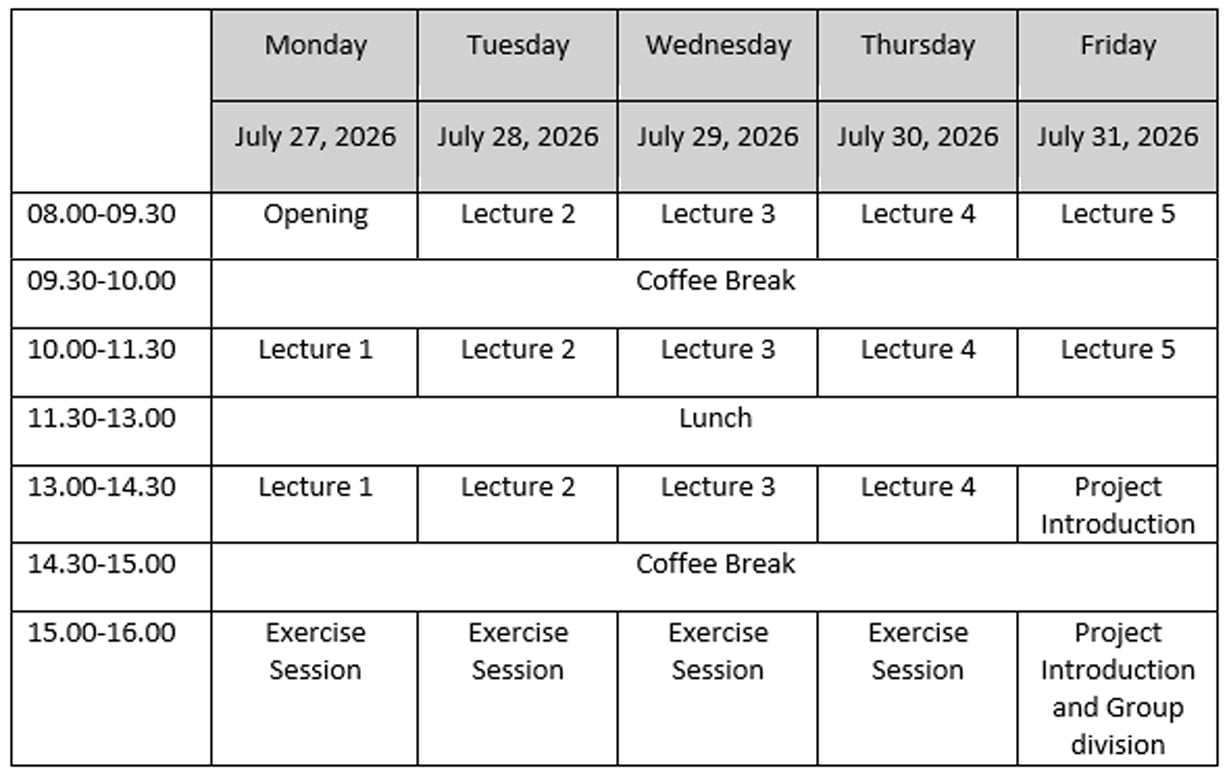
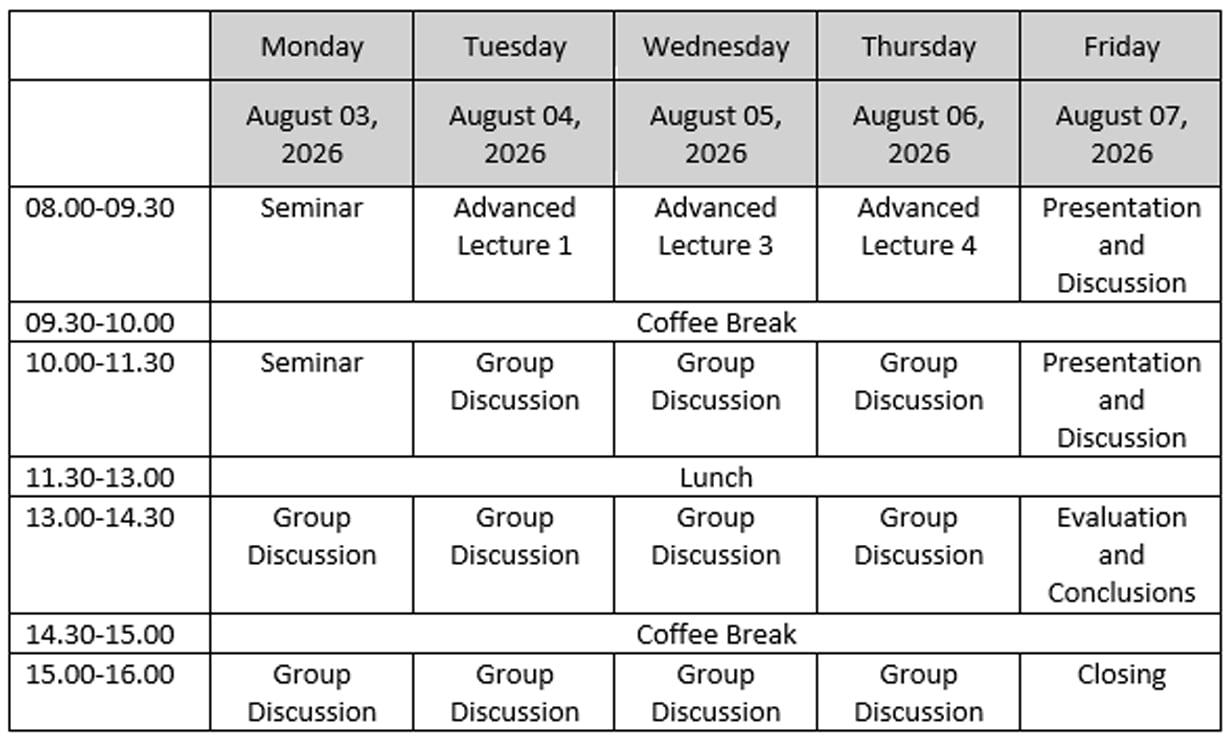
The School program will consist of structured lecture sessions, tutorials, and interactive discussions conducted over the two-week period. Each day will include focused thematic sessions covering core topics in bifurcation theory and perturbation methods.
A detailed timetable, including daily schedules and course topics, will be made available on the official website prior to the start of the School.Tentative (Daily) Schedule:A two-week program from Monday to Friday, 08.00-16.00 Western Indonesia Time. An excursion or social event will be held on August 1st, 2026.

Week 1

Week 2

Lecture 1
Dr. Ir. Wim T. van Horssen
Dr. Fitriana Yuli Saptaningtyas

Perturbation method applied to PDE problems with application in mechanical engineering

In this course initial-boundary value problems for weakly nonlinear string, beam, membrane, and plate equations will be studied. Asymptotic approximations of the solutions for these problems will be constructed by using perturbation methods such as averaging methods and multiple time-scales methods. The validity of these approximations will be proved for large times. Also, bifurcation methods will be used to detect resonances and to reduce undesired oscillations in such systems. Recently published journal papers will be incorporated in the course to show the direct applications of the (in this course presented) advanced mathematical techniques in the field of mechanical engineering.

Lecture 2
Prof. Dr. Abadi, M.Sc.
Riska Wahyu Romadhonia, M.Sc.

The Application of Averaging Method to Autoparametric Systems

This is an introductory course on the method of averaging, an asymptotic approximation method for solutions of perturbed systems. We present the theory and demonstrate the methodology through examples on finding the approximate solutions of autoparametric systems, coupled oscillator systems that have many applications in mechanical engineering.

Lecture 3
Prof. Dr. J.M. Tuwankotta, M.Si
Rahmi Rsin, S.Si., M.Sc.Tech., Ph.D.

Averaging and Perturbation from Geometric Viewpoint

In these lectures, we will focus on using the averaging method to construct an approximation for Poincare’ map for weakly nonlinear oscillations.  We will show that under some conditions, global information which is valid for a semi-infinite time interval can be obtained.  Next, we will study perturbations of the Hamiltonian system possessing a homoclinic orbit.  This perturbation method is known as the Melnikov method. Finally, we will explain the relation with the celebrated Kolmogorov-Arnold-Moser Theorem and the Moser Twist Theorem for the Hamiltonian system.

Lecture 4
Prof. Dr. Fajar Adi Kusumo, M.Si
Dr. Livia Owen, M.Si.

Elementary Bifurcation Theory with Applications to Medical

In these lectures, we will introduce some basic concepts of Bifurcation and their applications in Medical Sciences. The lecture will start with the definition of Dynamical Systems, the concept of topological equivalent, and one parameter bifurcation of equilibria in a continuous time dynamical system.  Then we will show some examples from Medical Science where bifurcation occurs.  We also introduce a numerical continuation software that can be used to compute the bifurcation diagram.

Lecture 5
Dr. Eric Harjanto
Dr. Nikenasih Binatari, M.Si.

Perturbation Methods for Delay Differential Equations with Small Delays

This talk introduces the application of perturbation methods to delay differential equations (DDEs), focusing on systems with small time delays. Delay effects are common in various physical, biological, and engineering systems, often leading to complex dynamics even when the delays are small. By treating the delay as a small parameter, we demonstrate how Taylor expansions can be used to approximate DDEs by ordinary differential equations, enabling the use of classical perturbation techniques. Several illustrative examples will be discussed to show how small delays influence the system's stability and long-term behavior. The session aims to provide both theoretical insights and practical tools for analyzing weakly delayed systems, and highlights connections to bifurcation phenomena and nonlinear dynamics.

Explore Surabaya City

Surabaya, the host city of SEAMS School 2026, is Indonesia’s vibrant “City of Heroes,” offering a rich blend of historical landmarks, modern urban life, and local culture. During the School, participants may explore:

Heroes Monument (Tugu Pahlawan) and 10 November Museum

A national landmark commemorating Indonesia’s independence history.

House of Sampoerna

A preserved colonial-era complex featuring museums, architecture, and cultural exhibitions.

Surabaya Old Town (Kota Lama)

Historic streets, heritage buildings, and cultural spaces reflecting Surabaya’s past.

Suramadu Bridge

One of Indonesia’s longest bridges, connecting Surabaya with Madura Island and offering scenic views.

Traditional markets and culinary centers

Local food destinations showcasing authentic East Javanese cuisine.

These attractions provide participants with opportunities to experience Surabaya’s cultural heritage alongside the academic program.

Registration and Dates

SEAMS School 2026 will take place from July 27 to August 8, 2026, at Universitas Negeri Surabaya, Indonesia. Participation is open to postgraduate students and young researchers in mathematics or related fields.Interested applicants are required to complete the online registration via the official SEAMS School website. Selection will be based on academic background and research interest. Registration is free of charge, and limited funding support may be available for selected participants.

Important Dates:

- April 19, 2026 – Registration deadline
- May 4, 2026 – Notification of accepted participants
- July 27 – August 8, 2026 – SEAMS School 2026

CONTACT

For further information regarding SEAMS School 2026, registration procedures, or logistical matters, please contact the organizing committee

Department of Mathematics,
FMIPA Universitas Negeri Surabaya

Jl. Ketintang, Gedung C8–C9, Surabaya 60231, Indonesia
Email: seamsschool@unesa.ac.id
Website: https://unesa.me/SEAMS2026
Phone / WhatsApp: +62 812-3625-2200 (RISKA)